



125 mg Sensoril® Ashwagandha per capsule. Root and leaf. Stimulant-free support for stress and sleep.

What makes Sensoril® Ashwagandha different
The oldest adaptogen, held to a modern standard.
Ashwagandha (Withania somnifera) has been used in Ayurvedic medicine for thousands of years. That history is its greatest strength, and also the reason the shelf is now crowded — most extracts differ enormously in what they actually contain.
Purica Ashwagandha uses Sensoril® Ashwagandha, a patented water-only extract of root and leaf standardized across three groups of bioactive compounds, including more than 10% withanolide glycosides: the highest concentration among solvent-free ashwagandha ingredients, and the one carrying the largest body of clinical research.
Measured in bloodwork
Calm is subjective. Cortisol is not.
Sensoril® Ashwagandha was put to a stronger test than a simple ‘How do you feel?’ In a 60-day randomized, double-blind, placebo-controlled trial, chronically stressed adults were assessed through bloodwork and standardized anxiety scores.
Responses were dose-dependent, with higher intakes performing better. Two Purica capsules provide 250 mg of Sensoril® Ashwagandha per day — the same as the study's 125 mg twice-daily intake — and produced a greater than 24% reduction in serum cortisol. Sensoril® Ashwagandha has also been shown to significantly increase DHEA, the hormone that helps return the body to balance once a stress reaction has passed. Fourteen clinical studies and counting.

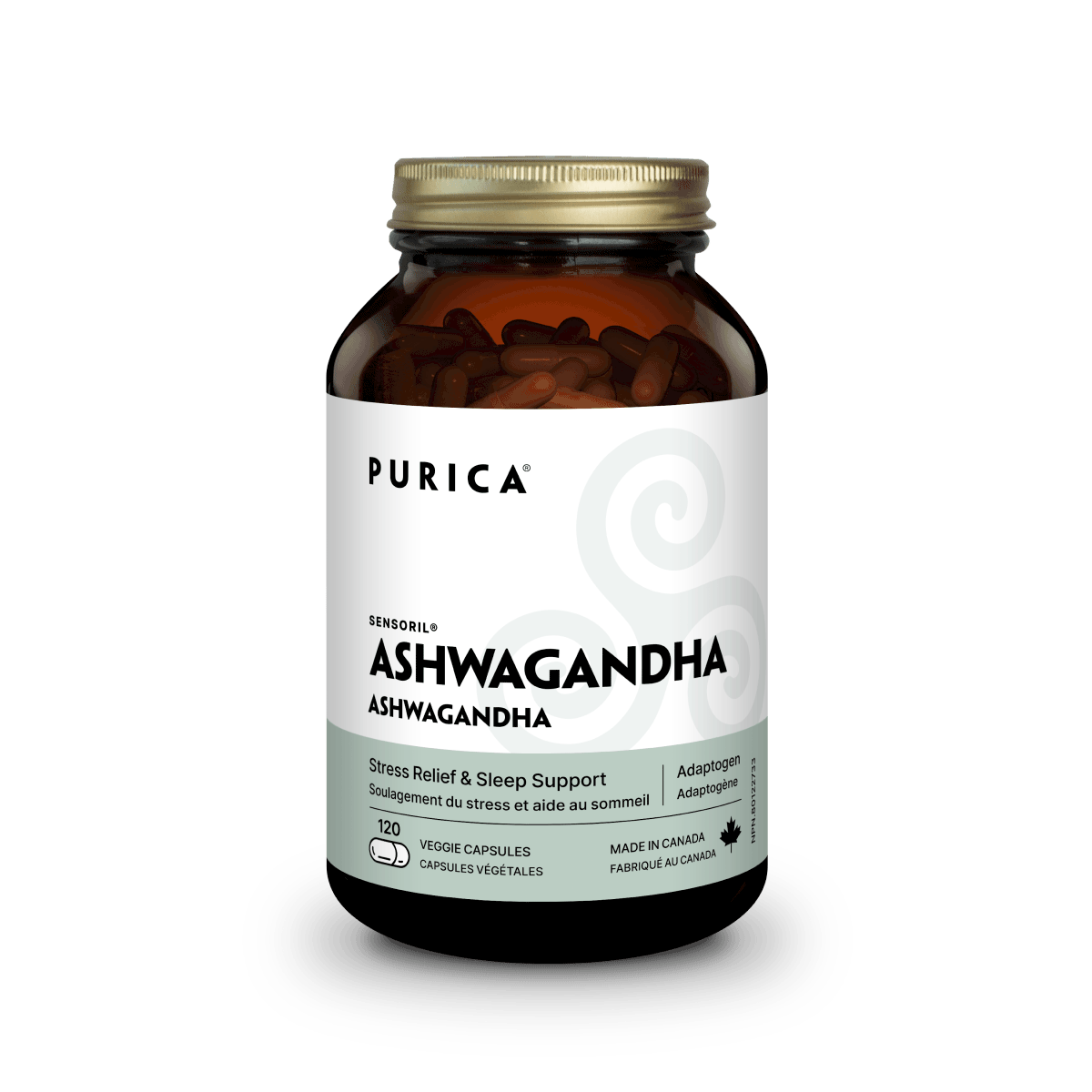

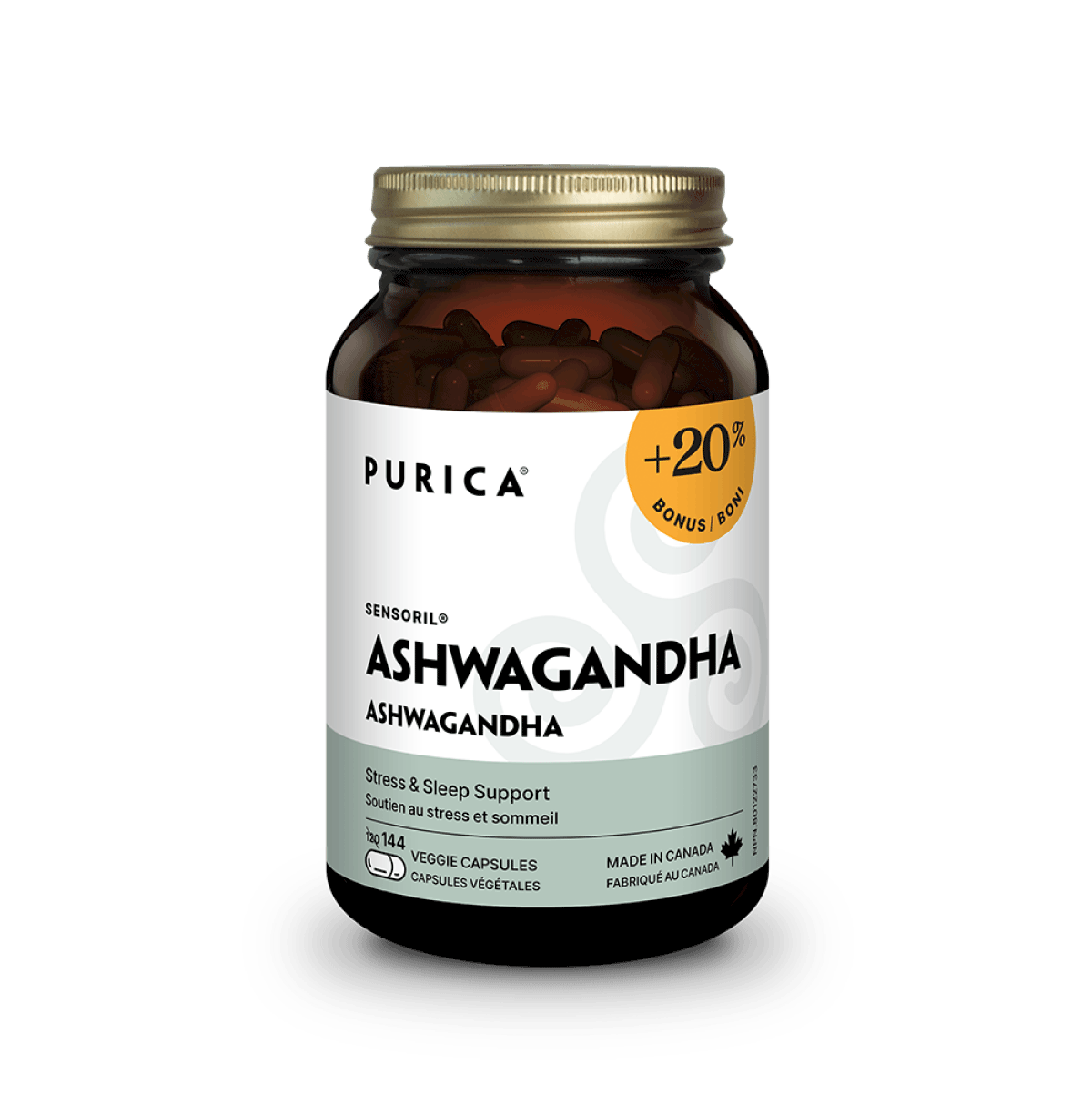
Ashwagandha
Calm an overthinking mind and lower daily stress levels fast. When physical or mental tension builds up, PURICA Ashwagandha provides pure, organic adaptogenic relief to help you stay grounded. Formulated for maximum bioavailability, it helps regulate cortisol, ease anxious feelings, and improve sleep quality so you can navigate demanding days with steady focus and ease. Take control of your daily stress—add PURICA Ashwagandha to your routine today.
Benefits
Size:120 caps
Pickup available at 6157 Scott Rd
Usually ready in 2 hours
Ashwagandha
120 caps
6157 Scott Rd
Pickup available, usually ready in 2 hours
6157 Scott Rd
Duncan BC V9L 6Y8
Canada
Medicinal ingredients (each capsule contains):
| Sensoril® Ashwagandha (Withania somnifera) - leaves and roots 5:1 extract equivalent to 625 mg of dried leaves and roots. Providing: (32-45% Withania oligosaccharides, 10-20% Withanolide glycosides, 0.05-0.5% Withaferin A) | 125.0 mg |
Recommended use or purpose:
Helps relieve stress symptoms such as fatigue, sleeplessness, irritability, and inability to concentrate. Helps reduce cortisol and C-reactive protein: the biomarkers of physical stress. Also helps support cardiovascular health.
Recommended dose:
Adults: 1 capsule 2 times per day. For use beyond 12 weeks, consult a health care practitioner.
Non-medicinal ingredients:
Hypromellose, microcrystalline cellulose, magnesium stearate (plant-source)
Cautions and warnings:
Consult a health care practitioner prior to use if you are pregnant or breastfeeding. Do not consume with alcohol, or other drugs or natural health products with sedative properties. If symptoms persist or worsen, consult a health care practitioner. Store in a cool dry place, away from children. Do not use if safety seal is broken. Protect from moisture.
- Relief of those pesky stress symptoms: sleeplessness, fatigue, irritability.
- Relief of high cortisol and C-reactive protein levels.
- Relief when reading a great book, but finding yourself reading the same paragraph over and over.
Traditional Use and Folklore
Ashwagandha (Withania somnifera) is one of the most revered herbs in Ayurveda, with a rich history of traditional use spanning thousands of years. In ancient Ayurvedic practices, it is classified as a Rasayana—a rejuvenative tonic traditionally utilized to promote longevity, support physical vitality, and cultivate mental well-being.
"Power of a Horse" (Vitality and Strength)
The Sanskrit Origin: The name Ashwagandha translates from the Sanskrit words ashva (horse) and gandha (smell), describing the unique aroma of its fresh root.
Traditional Meaning: In folklore, it was historically believed that consuming the root helped impart the vigor, stamina, and strength associated with a horse.
Historical Use Case: In Ayurvedic traditions, Ashwagandha was historically relied upon to help relieve general debility and weakness, supporting the body during convalescence or old age, while traditionally being used to support sexual vitality.
"Rasayana" (Rejuvenative Tonic)
Longevity and Wellness: Documented in ancient texts like the Charaka Samhita, Ashwagandha was celebrated as a premier botanical to support a youthful state of physical and mental health.
Nervine Tonic: It was traditionally utilized as a nervine tonic (Medhya Rasayana) to support cognitive function, memory, and mental focus.
Immune Support: Folklore attributes to Ashwagandha the ability to support natural immune function and enhance the body's overall physical resilience.
"Adaptogen" (Stress Management)
Balancing Vata and Kapha: Ayurveda views wellness as a harmony of energies (doshas). Ashwagandha was traditionally used to help balance aggravated Vata (associated with restlessness and nervousness) and Kapha energies.
Grounding Energy: It is recognized in traditional practice as having a warming, grounding energy, helping to calm a restless mind.
Traditional Sleep Aid: Reflecting its Latin species name somnifera ("sleep-inducing"), Ashwagandha has been used traditionally in Ayurveda as a natural sleep aid to help relieve restlessness and promote restful sleep.
Traditional Use Notice: This historical information is presented strictly to share the cultural folklore and traditional context of Withania somnifera as viewed through the lens of Ayurvedic medicine. These traditional frameworks focus on holistic health balance and are distinct from modern clinical endpoints. This information is not intended to replace modern medical advice or imply approved therapeutic treatment for specific medical conditions. Individual product efficacy should be guided by the approved uses listed under its specific Natural Product Number (NPN).
How stress shows up
Stress has a symptom list.
Stress can drain energy, disrupt sleep, shorten patience and scatter concentration. Research on Sensoril® Ashwagandha focuses on these familiar effects—and how Ashwagandha can help.
01
Fatigue
Running on empty, without the rush
Helps relieve the fatigue stress leaves behind, instead of covering it over with something that wears off by mid-afternoon.
02
Sleeplessness
Body tired, mind still working
Helps relieve stress-related sleeplessness — the particular kind where you are exhausted and awake at the same time.
03
Irritability
A longer fuse
Helps relieve the irritability that builds across a demanding stretch and tends to land on whoever happens to be nearest.
04
Inability to concentrate
Attention that stays put
Helps relieve the scattered concentration that makes familiar work take noticeably longer than it should.


Sensoril® Ashwagandha and training load
Overtraining is a stress response too.
Hard training is stress the body cannot tell apart from any other kind. The same cortisol that climbs through a bad month at work climbs through a heavy training block — which is why an adaptogen studied for stress keeps turning up in research on athletes.
01
Endurance
Oxygen and ATP
Ashwagandha has been studied for cardiovascular endurance through improved oxygen utilization during activity. At the cellular level, Sensoril® Ashwagandha has been shown to raise ATP and other energy-related metabolites produced in the mitochondria.
02
Strength and recovery
Symptoms of overtraining
In a double-blind, placebo-controlled trial, subjects taking Sensoril® Ashwagandha at 125 mg twice daily saw an improvement in symptoms of overtraining, alongside reduced cortisol.
03
Inflammation
Soreness carried forward
The same intake produced a 36.6% reduction in C-reactive protein and a 70.6% reduction in muscle pain — less damage carried into the next session.
What people notice.
Balance. Strengthen. Restore.
The day can stay demanding. You can stay steady.
Support for staying rested, patient and focused through the stretches that ask the most.